
How to Photograph Your Family Pet Without Stressing Them Out
The dog has been lying in a patch of sunlight for twenty minutes. You reach for your phone, ask the kids to come and look, and by the time everybody gets there, the dog is in the kitchen. Sometimes the easiest way to get a good pet photo is to take it before you’ve announced that you’re taking one.
Start with a place your dog or cat already likes, use the light you have, and take a few photos from where you’re sitting. You can sort out the finer points once you’ve got one picture you like. If your pet gets up and leaves, you can always try again another day.
Start Where Your Pet Already Feels at Home
If your dog stretches out on the rug after breakfast, keep your phone nearby around that time. If your cat sits on the windowsill while you make tea, try taking a photo from the kitchen doorway. Familiar routines give you a chance to catch the little things you see every day, like a dog resting their chin on a paw or a cat curling their tail around their feet.
This works especially well with a cat who leaves as soon as you come closer. Take a wider picture from where you are. A little more of the room in the frame can make the photo better anyway. The cushion your cat has claimed or the view out of the window helps tell the story of where they spend their afternoons. If they wander off, leave the spot open and carry on with your day. There’s no need to bring them back for another shot.
Give Children a Simple Job
One child can check whether the dog’s paws are in the frame. Another can choose a favourite from the photos afterwards. An older child who wants to take a picture can sit next to you and have a turn with the phone. Decide who’s holding it before you start so everyone has something to do and your pet has plenty of space.
If your child wants to be in the picture, try a scene that would happen anyway. They might read on the floor while the dog dozes a little way off. You can take a wider shot that shows both of them, even if neither is looking at the camera. Later, that may be the photo everyone likes best because it looks like an ordinary afternoon at your house.
Use Window Light and Get Down to Their Level
Before moving closer, look at the image on your phone. If the window is right behind your pet, their face may look dark even though the room seems bright. Shift a little to one side until the light reaches the front or side of their face. If they’re already settled, move yourself and leave them where they are.
Dark coats are a good example of how much difference that small change can make. If your black dog is lying by the window, try an angle where you can see the eyes and the edge of the muzzle on the screen. Tap the face to focus and, if your phone gives you a brightness slider, move it up a little. Check the result before taking another picture. You want to be able to see the face without washing out the detail in the coat.
Try one shot close to your pet’s eye level. Sit on the floor for a dog on the rug, or hold the phone a little higher for a cat on a chair. Then take a wider picture that includes the whole body. You’ll have one frame that catches their expression and another that shows how they sit or stretch out.
Choose a Photo You’ll Want to Keep
When you look through the pictures later, ask everyone to pick a favourite. Your child might choose the slightly blurry one where the dog was waiting for a crumb to fall. That’s a good photo for the family album. Add a short caption about what was happening, especially if the picture captures a habit you’ll want to remember.
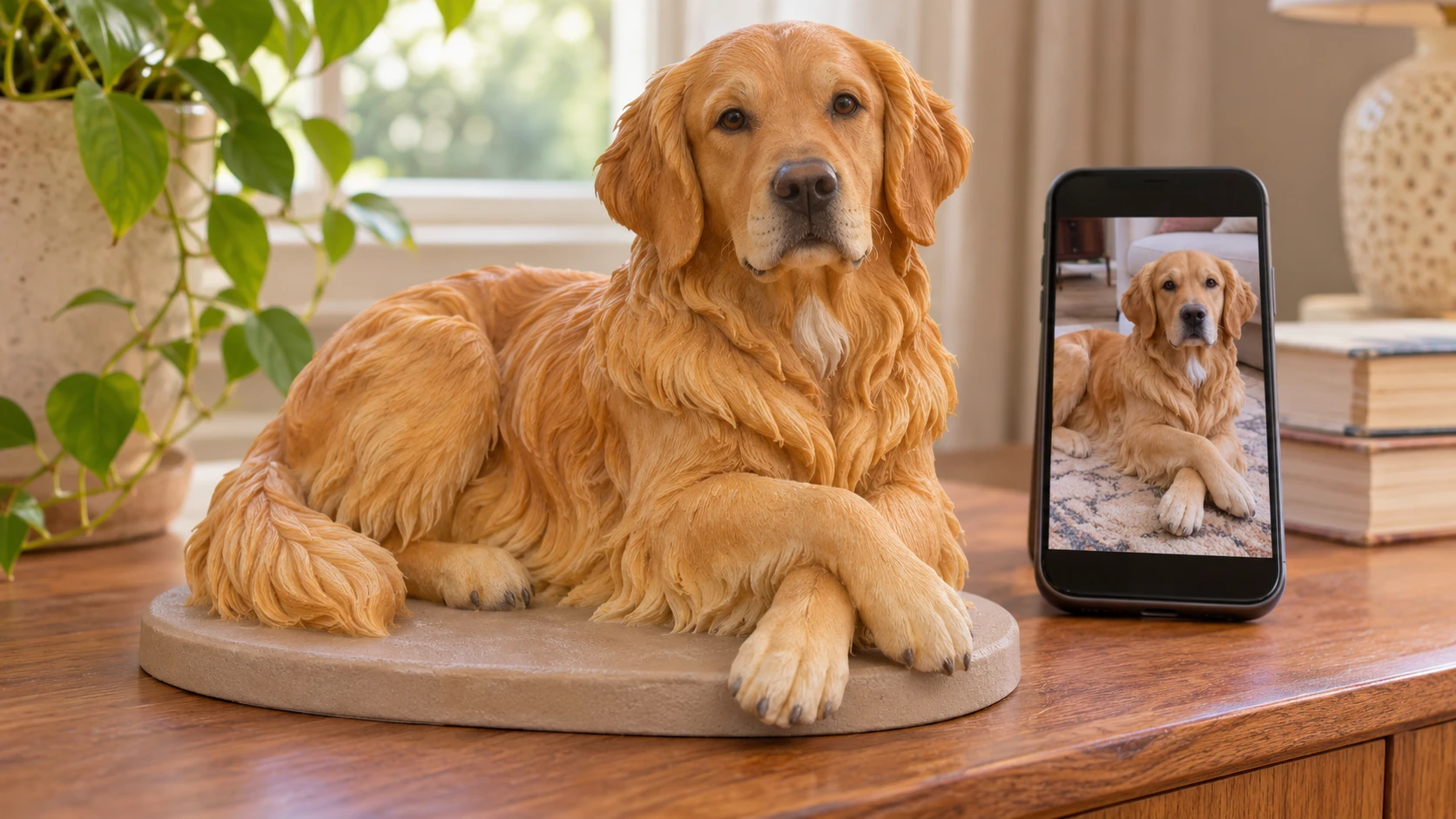
For a keepsake made from a photo, look for a picture that shows the details you’d want to recognise. Maybe your dog has one ear that folds over, or your cat has a white patch under their chin and always sits with one paw tucked in. Zoom in on the original photo to see what’s actually visible. If the face is clear but the tail or paws are cut off, look through the wider shots from the same afternoon.
Those details can help if you decide to make something from the picture. DoDoWish offers a large custom pet figurine made from a photo in 15 cm and 20 cm sizes for display. If you’re considering a figurine, choose the pose you most associate with your pet and check that the photo shows their markings and the outline of their ears clearly. The close-up that makes you laugh can go in the album, while the wider picture might work better as the reference.
Conclusion
The next time your dog settles on the rug or your cat takes up their usual spot by the window, try two or three photos before doing anything else. Move a little if you need better light, and let the kids help pick a favourite later. Whether it ends up in the family album or becomes the reference for a DoDoWish pet figurine, the picture worth keeping is often the one that makes someone say, “That’s exactly how they sit.”

 Rachel K. is the co-founder and author at pethubnest She blends her passion for pets with her interest in technology, covering innovative products and ideas that transform pet care.